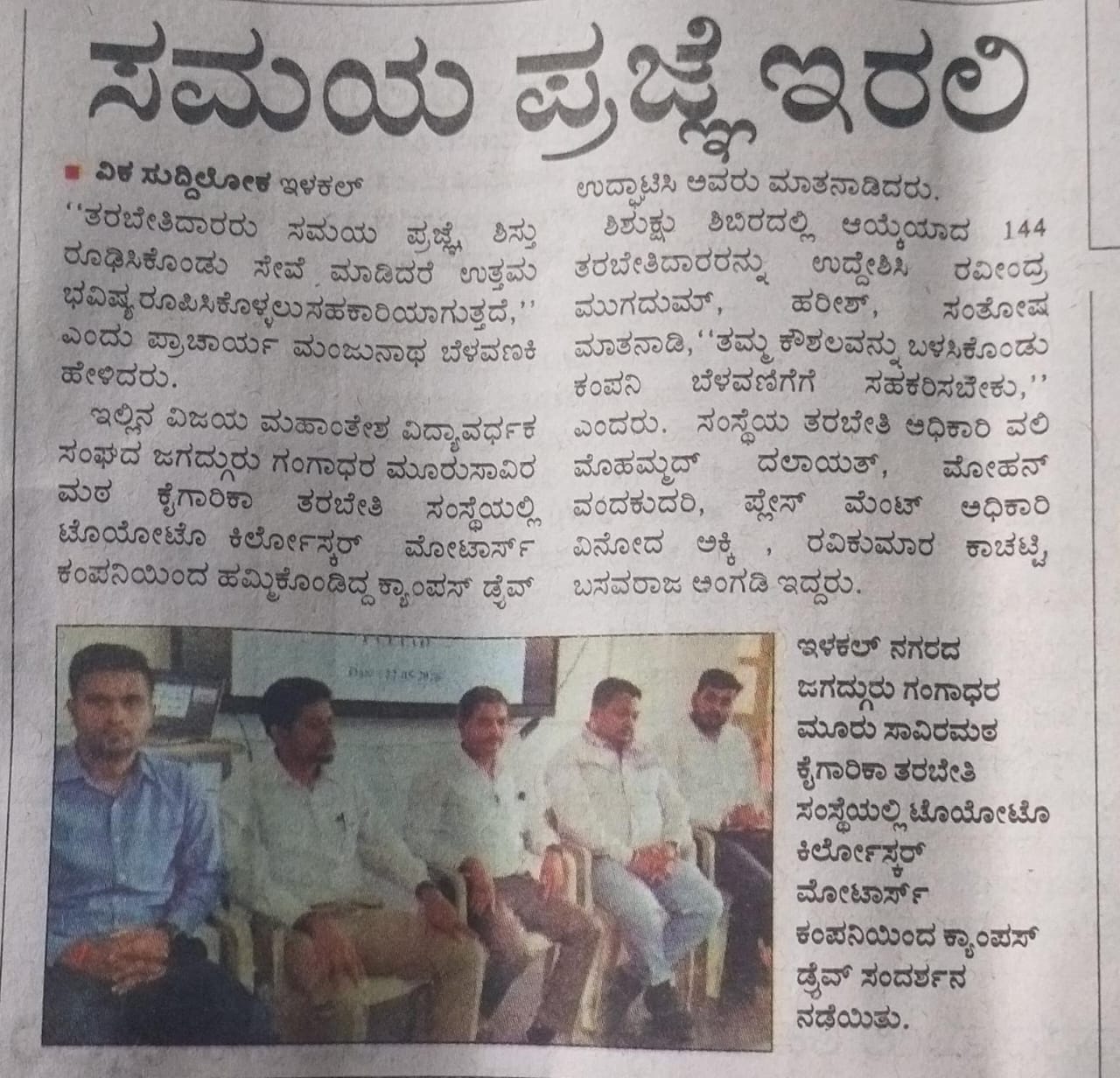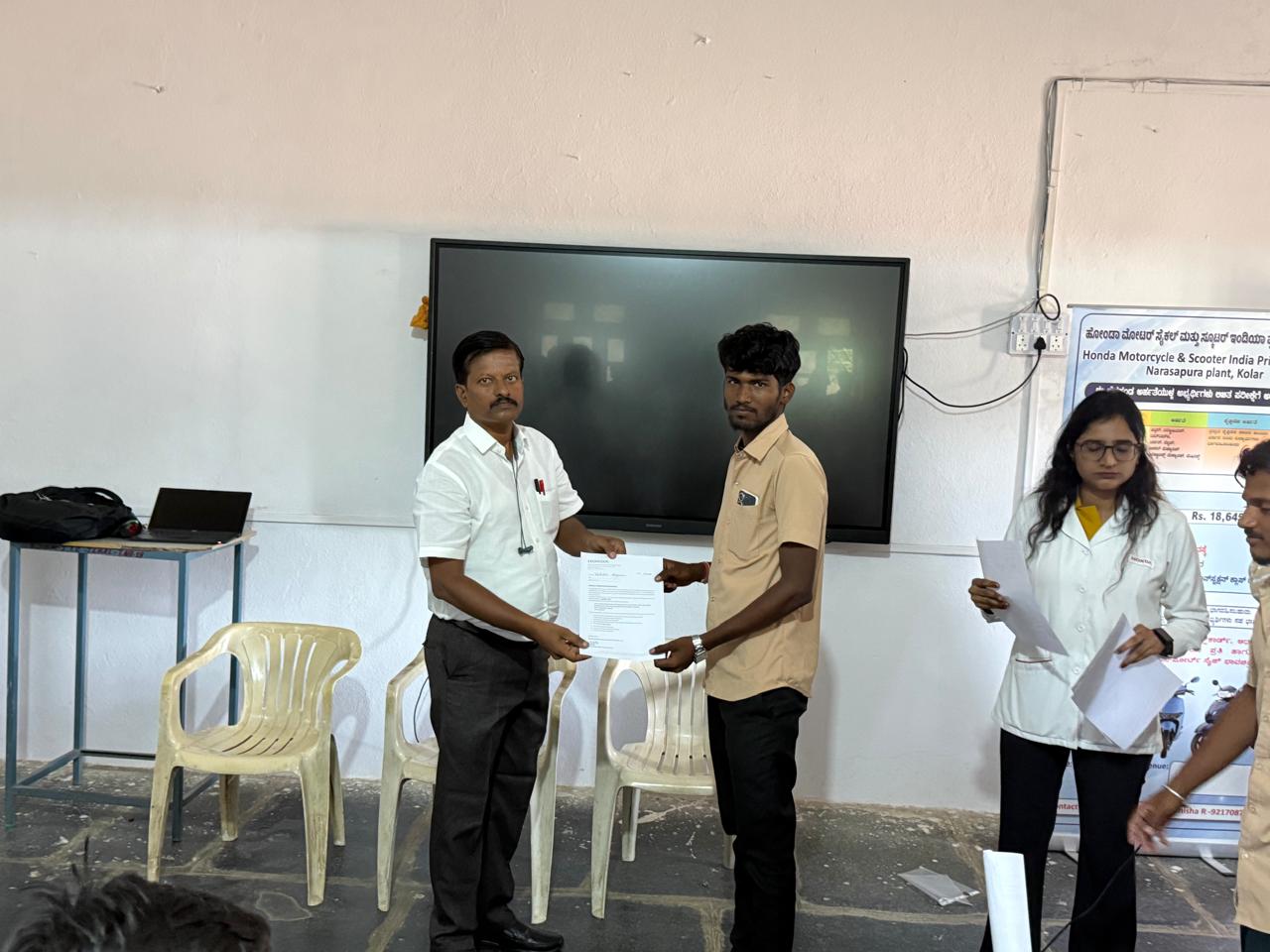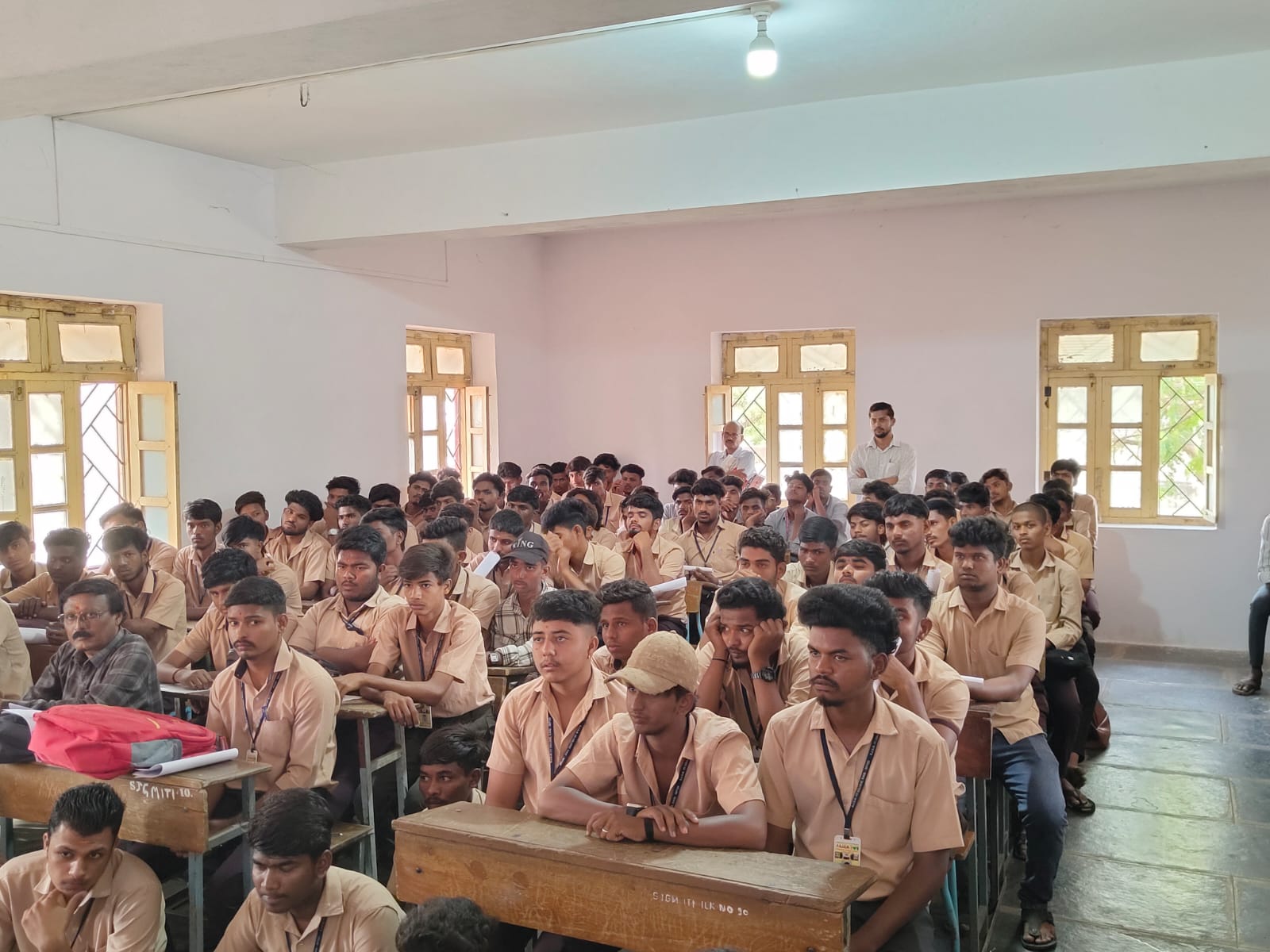
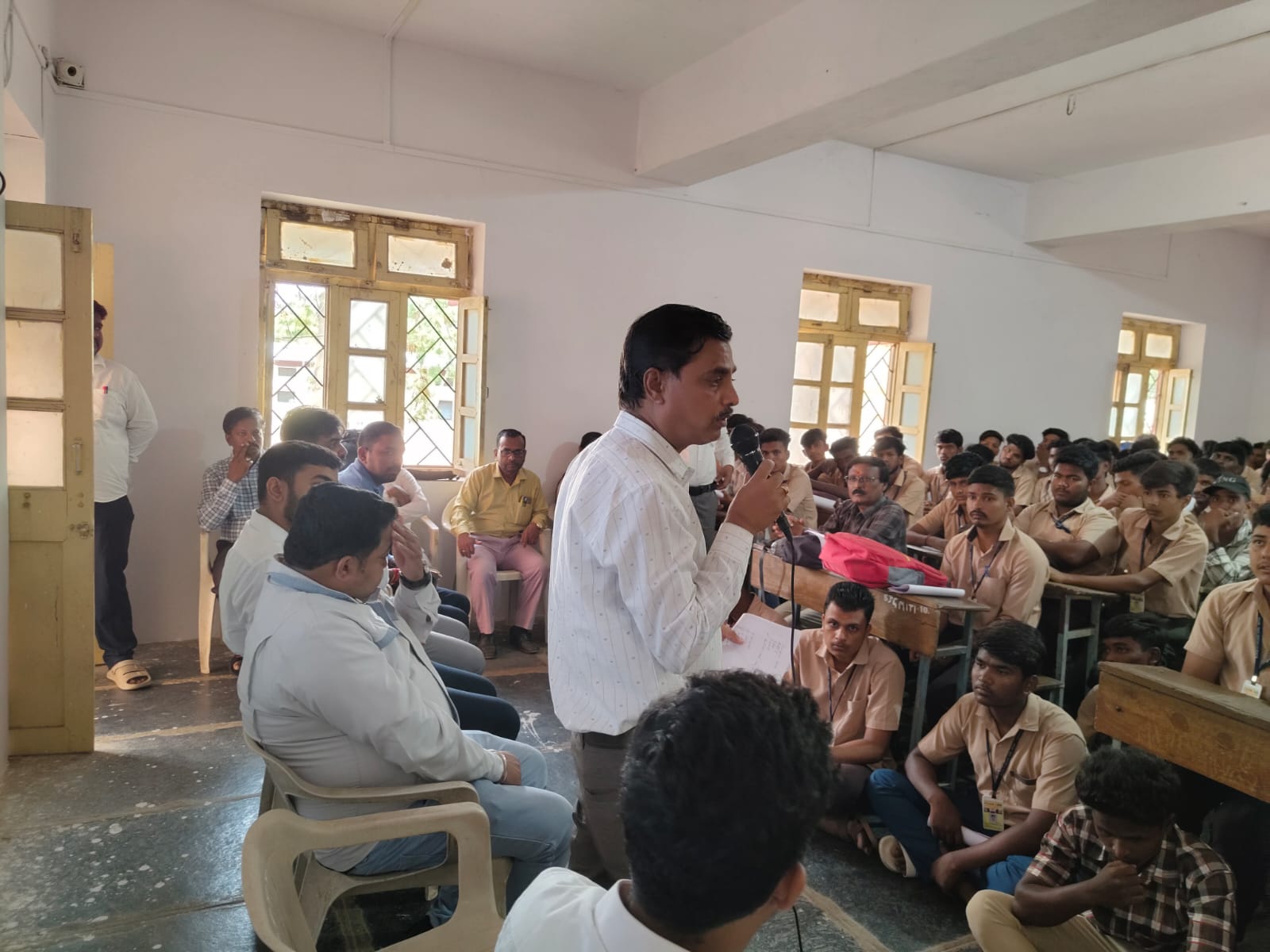

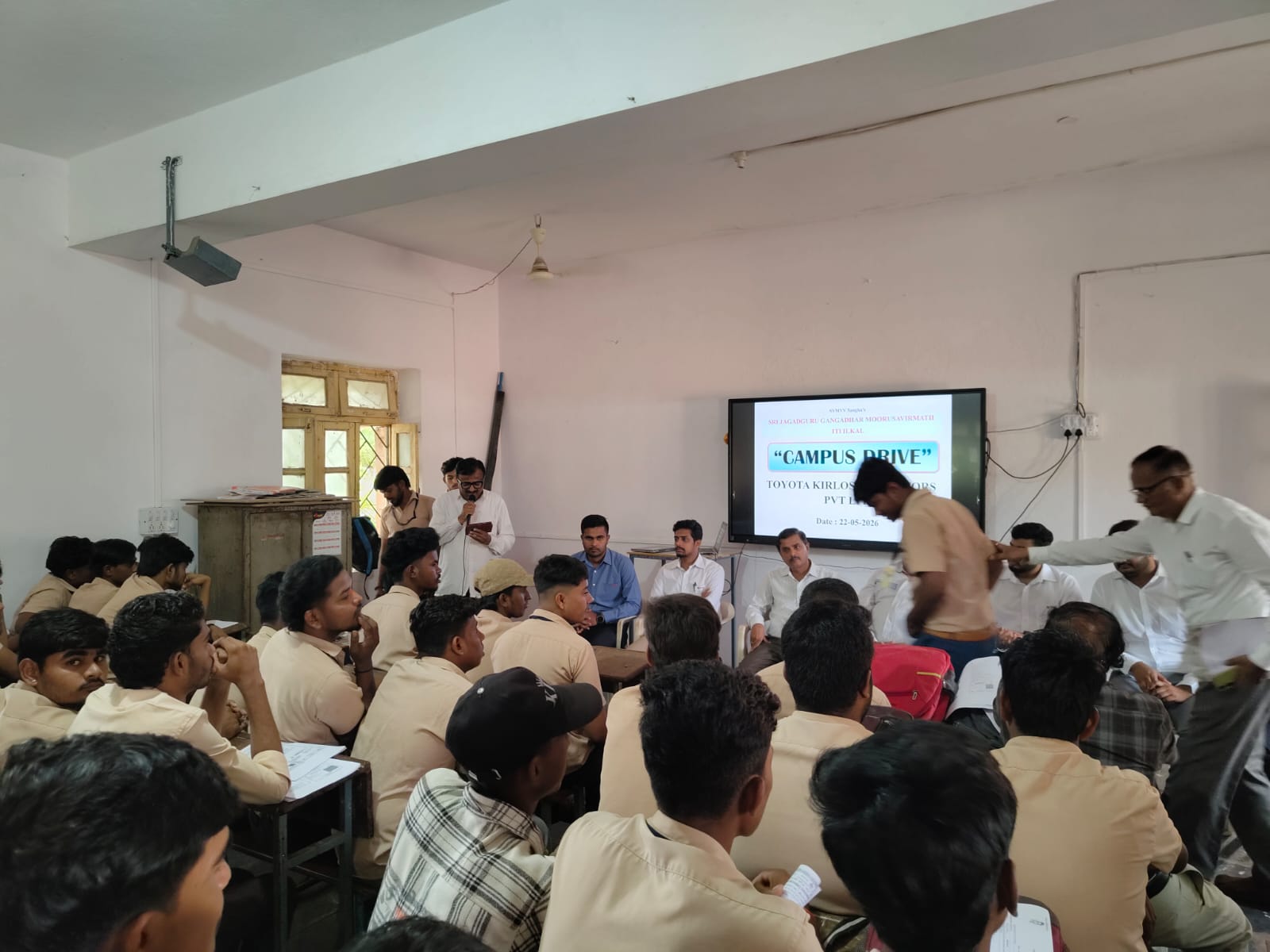
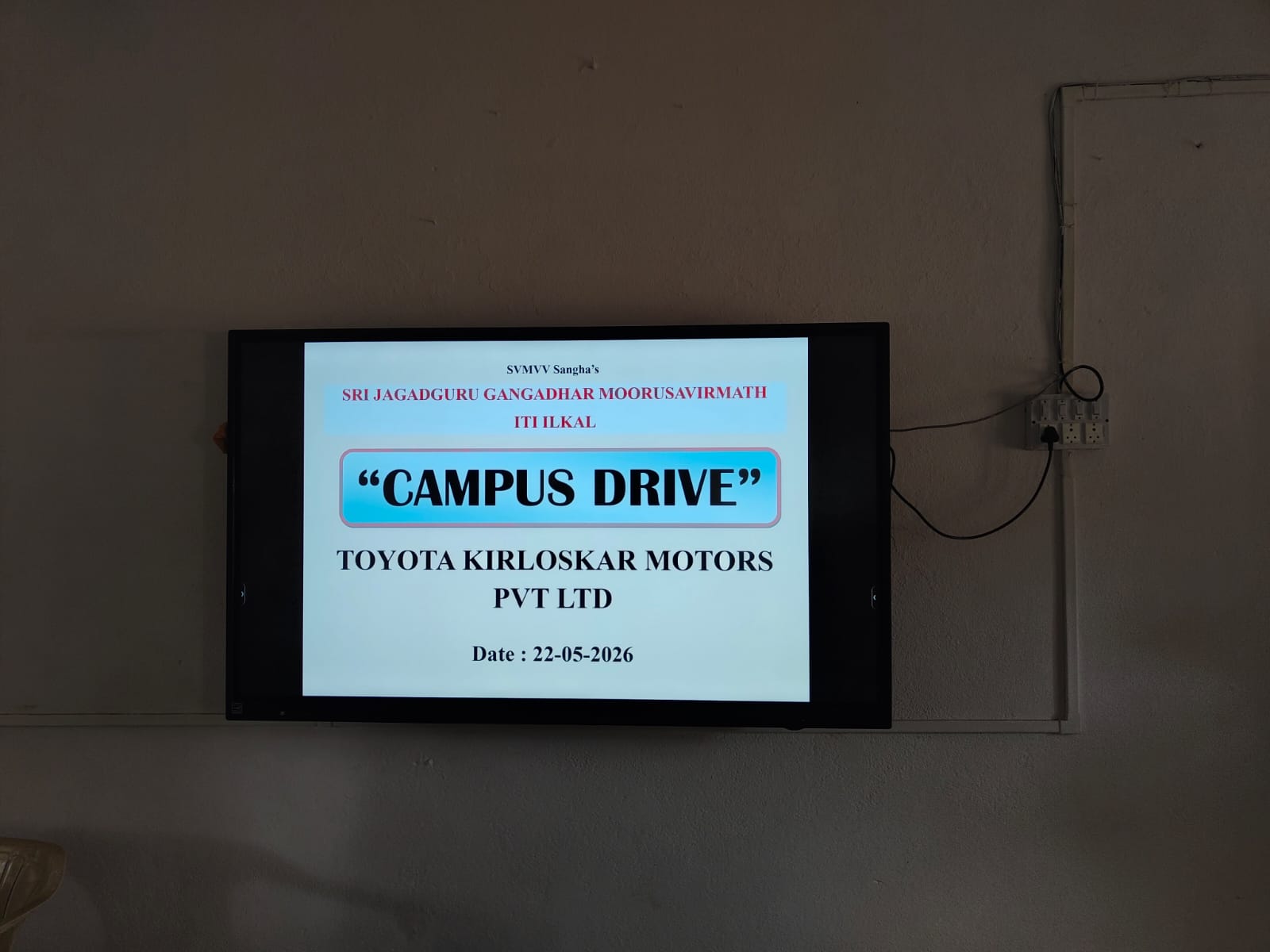
SVMVV Sangha’s Sri Jagadguru Gangadhar Moorusavirmath ITI, Ilkal, successfully conducted a highly targeted “CAMPUS DRIVE” on May 22, 2026.
By organizing this placement drive, the college successfully brought Toyota Kirloskar Motors Pvt Ltd, a global automotive leader, directly to its campus to recruit technical talent. The event reflects the institution’s active leadership in bridge-building between rural technical students and major multinational corporations, ensuring direct employment paths upon graduation.
Institutional placement event:
Hosting Institution: SVMVV Sangha’s Sri Jagadguru Gangadhar Moorusavirmath ITI, Ilkal.
Event Type: “CAMPUS DRIVE”
Recruiting Company: Toyota Kirloskar Motors Pvt Ltd.
Event Date: May 22, 2026 (22-05-2026).
Highlighting an active industry-institute collaboration aimed at securing employment opportunities for Industrial Training Institute (ITI) students.
Industry-Institute Interaction (III), the role of vocational training (ITI) in the automotive sector, and campus recruitment dynamics.
1. Industry-Institute Interaction (III) and Technical Education
Literature emphasizes that collaborations between technical training institutes and major manufacturing firms are vital for minimizing the skill gap.
Skill Alignment: Research shows that traditional academic curricula often lag behind rapid technological advancements. When major firms engage directly with institutes, it ensures that training aligns with current industrial standards.
Resource Sharing: Joint initiatives allow students to transition more smoothly from theoretical environments to practical industrial floors, enhancing local employability.
2. The Role of ITIs in the Automotive Sector
The automotive manufacturing sector, led by companies like Toyota Kirloskar Motors, relies heavily on a skilled technical workforce for production lines, quality control, and precision engineering.
Vocational Capacity: Industrial Training Institutes (ITIs) serve as the primary pipeline for grassroots technical talent in developing manufacturing hubs.
Socio-Economic Mobility: Campus recruitment drives in rural or semi-urban regions (such as Ilkal) provide vital entry-level corporate opportunities to vocational graduates, fostering local economic development and upward mobility.
3. Benefits of Campus Recruitment Drives
Campus recruitment serves as a mutually beneficial mechanism for both the industry and academia.
For Employers: It reduces recruitment overheads, cycle times, and allows companies to screen a concentrated pool of pre-vetted candidates who possess specialized trade skills.
For Institutions: Regular placement drives by Tier-1 manufacturers elevate the institution’s prestige, boost enrollment rates, and validate the quality of the training provided.